
The Painted Token
When a Coin is More than Just a Coin
Most of the time a coin is worth just face value. In rare instances, its rarity holds extended value as a collector piece. Sometimes a coin holds value for personal reasons—maybe one passed down from a family member or attained on a special occasion. At Atlas Arcadia, we believe some coins’ values come from the stories they tell.
Discovering a new or long-forgotten arcade chain emblazoned on the face of a token is often reward enough when digging through collections of exonumia. However, for those of us who were alive to experience the thrill of the arcade, it’s the small flash of color amid the silver and brass that brings a smile to our faces.
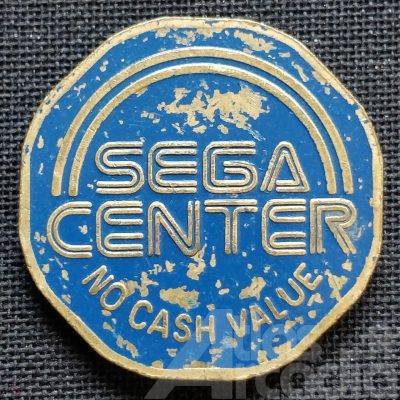
A painted token—or painted quarter—is something of an enigma. Unlike a mint error or commemorative issue, the paint wasn’t applied by a government mint. It was added later by arcade operators, route owners, redemption centers, or even individual employees for practical reasons. What began as a simple operational shortcut has unintentionally created one of the hobby’s most fascinating collectible niches.
There was never a single standard for painted coins. Every operator had their own methods, their own colors, and their own reasons. Some brushed a dab of enamel across the edge. Others dipped an entire face in bright red, green, yellow, blue, or white paint. Some carefully coated hundreds of coins at a time while others simply marked a handful with a paint pen before opening the doors for the day. The result is a colorful patchwork of local practices that now serves as an archaeological record of the arcade industry.

A Colorful Method to the Madness
One of the most common reasons for painting tokens was to identify test tokens. Before opening each morning, technicians needed to verify that coin mechanisms, credit switches, and game logic were functioning properly. To prevent attributing these tokens to genuine revenue, operators would use painted tokens that could easily be spotted when the cash boxes were emptied later. These tokens circulated only briefly before being returned to the technician’s toolbox, ready for the next repair.
Painted coins were also commonly used for promotional credits. Grand openings, birthday parties, tournaments, school events, and customer appreciation days often featured complimentary games. In some game rooms, if you found a painted quarter dispensed from the change machine, you could take it to an attendant for a prize or even more free credits. A painted token made it immediately obvious that the coin represented a free play rather than one purchased at the change machine. This prevented promotional giveaways from being confused with regular income and made accounting much simpler at the end of the day.
Coin pushers and other redemption attractions sometimes benefited from painted coins as well. Operators occasionally mixed painted quarters or tokens into the machine so they could monitor how frequently coins recycled through the playfield or identify pieces that had been intentionally seeded into the machine. Depending on the location, painted coins might also represent bonus payouts or promotional awards, although these practices varied widely from operator to operator.
Some arcades developed their own internal color codes. A red token might indicate one promotion, while green represented employee test credits and yellow designated a special event. Unfortunately for today’s collectors, very few of these systems were ever documented. Once an arcade closed, the meaning behind those colors often disappeared along with it.
An Appealing Mystery
Unlike most collectibles, painted arcade coins bear the unmistakable signs of a working life. Chipped paint, worn edges, and decades of handling reveal that these weren’t souvenirs—they were tools, passed through change machines, coin mechanisms, and countless hands before ending up in a collector’s tray.
Their scarcity only adds to their appeal. Created for daily operations rather than preservation, most were eventually stripped, spent, discarded, or lost. The few that survived often did so by accident, forgotten in cash boxes or mixed among ordinary tokens after an arcade closed.
For exonumia collectors, painted tokens are a unique blend of numismatics and Americana, preserving the everyday practices of an industry that has largely disappeared. For arcade enthusiasts, though, they represent something more personal. Each painted token recalls crowded game rooms, birthday parties, the clatter of coins, and the thrill of discovering one last credit in your pocket.
Here at the Atlas, we believe that documenting the locations and the memories is only half the battle; the currency that powered those memories is just as important.
What about you? Do you remember the specific “house rules” for painted tokens at your local arcade? Did you ever find a blue token in your bucket?
Drop us a comment or join the discussion in our subreddit. We’re looking for your stories to help verify the operational history of these iconic locations. Join us in our quest to save arcade history, one token at a time!